

Opening a Dutch bank account is one of the first things you’ll need to do after moving to the Netherlands, but not every bank makes it easy for expats.
Some don’t offer their app in English, while others won’t let you sign up until you have your BSN (citizen service number).
As a team of internationals, we understand the struggle. To help you decide, we’ve tested the main Dutch banks and neobanks, looking at how easy they are to sign up for, their features, pricing, and mobile apps.
All the banks in our list below tick off two important boxes:
- They’re available in English, especially in their mobile banking apps.
- They offer debit card options, as credit cards aren’t widely accepted in the Netherlands.
TIP: In a rush? Our top pick for a bank for expats is ING. They have a top-notch mobile app, heaps of features, and are tailor-made for expats in the Netherlands.
Ready to find the best bank accounts for expats in the Netherlands? Let’s jump in!
Choose a section below!
This post might have affiliate links that help us write the articles you love, at no extra cost to you. Read our statement.
Our research has whittled down best banks for internationals in the Netherlands, from traditional Dutch banks to app-based neobanks.
All of the banks below are licensed and regulated in the EU, so your money (up to €100,000 per person, per bank) is guaranteed.
| 🏦 Bank | 💸 Monthly account fees | 🆔 BSN required? | 💳 IBAN |
|---|---|---|---|
| ING | €4 to €44.99 | 90-day grace period | Dutch |
| bunq | €0 to €18.99 | 90-day grace period | Dutch |
| Revolut | €0 to €65 | Yes | Dutch |
| N26 | €0 to €16.90 | No | German |
| ABN AMRO | €4.30 | 120-day grace period | Dutch |
One of the biggest and most well-known Dutch banks, ING, is a popular choice among locals and internationals alike for its accessibility, affordability, and handy range of banking features.
With its English mobile app, expat-friendly website, free (yes, free!) bank accounts for students, handy money-management features, and a €100 welcome bonus, the switch to Dutch banking is as seamless as can be.
💶 Monthly account fee: from €4
🆔 BSN needed to sign up: no; BSN-free for 90 days
🎓 Student account available: yes (free for students aged 18-29)
Between the ability to earn Points for free perks, use a personal AI banking assistant, and access some of the best interest rates in the Netherlands, bunq is futuristic and feature-packed.
As a neobank, this Dutch bank has no physical branches, but we can attest that its app has everything you need.
💶 Monthly account fee: from €0
🆔 BSN needed to sign up: no; BSN-free for 90 days
🎓 Student account available: yes
When it comes to multi-currency accounts and international transfers, Revolut is a true banking heavyweight.
Saving in multiple currencies is a breeze, even on a free plan. Plus, you can seamlessly and speedily transfer up to €1,000 internationally — with no hidden fees!
💶 Monthly account fee: from €0
🆔 BSN needed to sign up: no; BSN-free for 90 days
🎓 Student account available: yes
In addition to handy money-management features, an excellent free plan, and investment opportunities, N26 is one of the few banks that doesn’t require a BSN.
However, let op: N26 will provide you with a German IBAN, not a Dutch one.
💶 Monthly account fee: from €0
🆔 BSN needed to sign up: no
🎓 Student account available: no
With free plans for students and a 120-day grace period to provide a BSN, ABN AMRO is a solid choice for internationals in the Netherlands.
Even better? ABN AMRO’s Basic Payment Package allows you to create a flexible banking package of a current account, cards, and features tailored to your needs.
💶 Monthly account fee: €4.30
🆔 BSN needed to sign up: no; BSN-free for 120 days
🎓 Student account available: yes (free for students aged 18-24)
You might be wondering why we chose to highlight these banks in particular — after all, there are plenty of other banks in the Netherlands.
Our main reason for not doing a full section on these is their lack of English-language options. For something as important as banking, it can be crucial to have information available in a language you understand.
But if you’ve been here a while or you aren’t afraid of doing some Google Translate work, then any of these other banks are worth investigating:
-
Rabobank
-
ASN Bank
-
Triodos Bank
-
Knab
Not sure which bank to choose? Watch our founder break down some great options, including the pros and cons of each:
Savings rates have increased recently in the Netherlands, making it possible to really earn money on your savings.
However, most traditional brick-and-mortar banks are offering far lower interest rates than other neo-banks or online banks.
Find out more about savings accounts in the Netherlands, or check out our top recommendation below.
Not only is it free to set up an account with Trade Republic, but they also offer some of the highest savings deposit rates in the entire EU, so you can actually get rewarded for your savings abilities. (Pssst! They also have no minimum fixed term.) 💪 💶
If you have some savings that you want to earn money on or just want to save more than you spend, there are a few ways to do it:
-
Invest in an EU bank in another country (with all the standard EU banking protections) that has a higher interest rate through a service like Raisin.
-
Start investing easily with different investment apps in the Netherlands (we like DEGIRO and Scalable).
Disclaimer: Investing involves risk of loss.
There are lots of things you should keep in mind when you’re opening up a bank account in the Netherlands.
Some of them are purely down to personal preference, but others are things every expat opening a bank account in the Netherlands should be aware of.
Most traditional Dutch banks charge a fixed monthly fee for a basic plan, typically around €4. This plan typically comprises a current account, savings account, and debit card.
Neobanks, on the other hand, often offer a free plan — but you’ll want to read the fine print carefully. Free plans tend to come with extra limitations, such as a digital card only, with physical debit cards costing extra.
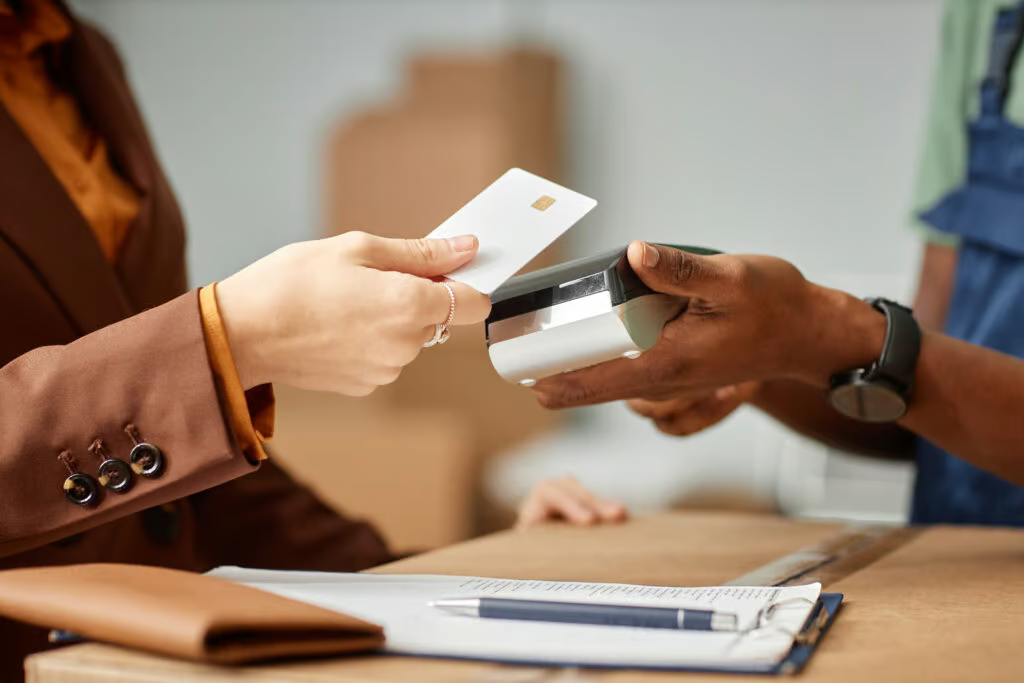
Are you a student, instead? You’re in luck, because many banks offer free plans for students.
Your BSN (burgerservicenummer, or citizen service number) is a unique personal number you get when you register at your local municipality. You’ll need it for most admin tasks in the Netherlands, from doing your taxes to arranging health insurance and more.
Banks need your BSN, too, because they’re required to share information about your account with the Dutch tax office (Belastingdienst).
READ MORE | Open a Dutch bank account without a BSN at these banks
However, you don’t always need it from day one.
Several Dutch banks, including ING, bunq, and ABN AMRO, let you open an account first and then provide your BSN. Others, like N26, don’t ask for a BSN at all.
Unlike most countries, the Netherlands is more reliant on debit than credit cards.

However, most Dutch banks will still offer you a credit card for a small monthly fee. You’ll usually need to pass a credit check first, which will include a look at your record with the BKR (Dutch credit registration office).
While they’re more widely accepted than they used to be, some shops (including certain supermarket branches) still only take debit cards, so don’t rely on a credit card as your only way to pay.
As an expat in the Netherlands, you’re likely to want to transfer money abroad at some point and also need to be able to receive it.
Some traditional banks will charge you quite a bit in fees when doing this. Many people choose to transfer money directly via money transfer providers like Xe or Wise, which offer very competitive rates.
Some Dutch banks have already paired up with one of these transfer providers and so will offer you low rates that way as well.

bunq, for example, works with Wise, and that means that you can save up to 3% on each transaction compared with a traditional bank.
If you like keeping a close eye on your finances, then choosing a bank with a good app is crucial.
Neobanks like bunq, Revolut, and N26 are built around their apps, with a plethora of budgeting tools, in-depth financial insights, and sub-accounts.
Traditional banks like ING and ABN AMRO tend to have much simpler apps, but they cover everything you need day to day.
Your plan might be to use your overseas bank account while living in the Netherlands, but you will quickly change your mind.
The Netherlands is pretty high-tech, but it still requires Dutch bank accounts for many things. For example:
-
While credit card payments are becoming more popular, some Dutch stores (including major supermarkets) still only accept debit cards.
-
Your Dutch employer typically wants a Dutch IBAN to pay your salary. Technically, you should be able to pay into any EU IBAN, but some employers make this very complicated.
-
You’ll need a Dutch IBAN for automatic direct debits, like for your gym, monthly public transport bills, and health insurance.
What has your experience of banking in the Netherlands been? Share it in the comments below!
How do I open a bank account in the Netherlands?
This can vary from bank to bank a little bit, particularly when you compare online banks to the brick-and-mortar variety. But there are some documents that you’re always going to need:
- A passport or some other form of government-issued ID
- Your BSN (if you don’t have it yet, some banks, like bunq and ING, will allow you to open an account anyway, so long as you supply the BSN within a certain period of time);
- Proof of address (such as a rental contract)
- A residency permit (if applicable)
If you’re setting up an account at a “traditional” bank, you can just wander in and set up your account then and there. A few days later, you’ll get your bank card in the mail.
It’s a very similar process to an online bank, except you send scans of these documents through the app, wait for them to be approved, and then you’re ready to go.
What do I need a bank account for in the Netherlands?
It’s pretty impossible to do anything in the Netherlands without a bank account. You’ll need it for paying rent, bills, getting a phone contract, a public transport account — all the usual stuff.
Furthermore, the Netherlands is fast becoming a pretty cashless society. Grocery stores like Albert Heijn generally refuse credit cards, as well, so getting a bank account in the Netherlands is definitely a must-do if you’re moving here.
How can I set up a business bank account in Holland?
If you’ve moved to the Netherlands and decided to start your own business, you’ll need a business bank account.
If you’re a freelancer, strictly speaking, you don’t need a separate bank account, though it can definitely be helpful to keep your work and personal expenditure separate. As a business owner, you’ll need a business bank account.
Banks will have lots of different options for you in this regard, so you can choose what suits you in consultation with them.
The documentation you’ll need is a bit more extensive than if you’re just setting up a personal account: you’ll need your KVK number (Chamber of Commerce Number) and potentially also a record of your business’s turnover.
Does the Netherlands use internet banking?
Internet banking is very common in the Netherlands, with most people organising their finances online these days. Online banks, of course, are well set up for this, but brick-and-mortar banks are also ready to serve all your internet banking needs.
Most will have apps, and they all have websites where you can see your spending, transfer money, or open new accounts.
What is an IBAN, and where can I find it?
Your IBAN (or International Bank Account Number) is a unique collection of letters and numbers that identifies your bank account worldwide. It’s important whether you’re sending money within the Netherlands or abroad.
It’s usually the same as your bank account number, which you’ll find on your debit card and in your mobile banking app.
What types of bank accounts are there in the Netherlands?
A “current account” is the bank account you’ll start with in the Netherlands, although if you’re a student it might be simply called a student account. If you desire, banks do offer credit cards in the Netherlands, although credit cards aren’t very widely used.
Most banks will also offer you savings accounts free of charge.
If you come to the Netherlands with a partner, you might want to open a joint account, which all banks will offer. And some banks will also allow you to set up an account with/for your child. A business account is a similar process, but separate.
How do I pay for things with my phone in the Netherlands?
Almost all banks in the Netherlands are set up for Google and Apple Pay, which means you should easily be able to pay for your coffee or new sweater without having your wallet with you.
Most stores in the Netherlands prefer cards over cash, so you shouldn’t have any trouble if you decide to travel light.
Are there any free banks in the Netherlands?
Most banks in the Netherlands will charge you a small fee to have an account with them. Digital banks like bunq will usually give you an account for free, but charge you for your debit card and for additional features.
If you’re a student, you should be able to get a free bank account with most major banks: ING and ABN AMRO both offer one. You’ll probably still need to pay a fee if you want a credit card, though, or other additional features.
Disclaimer: Investing involves risks, and you can lose your investment. DutchReview is not a financial consultancy. The content shared on the website and on DutchReview’s social accounts does not contain any financially binding advice